
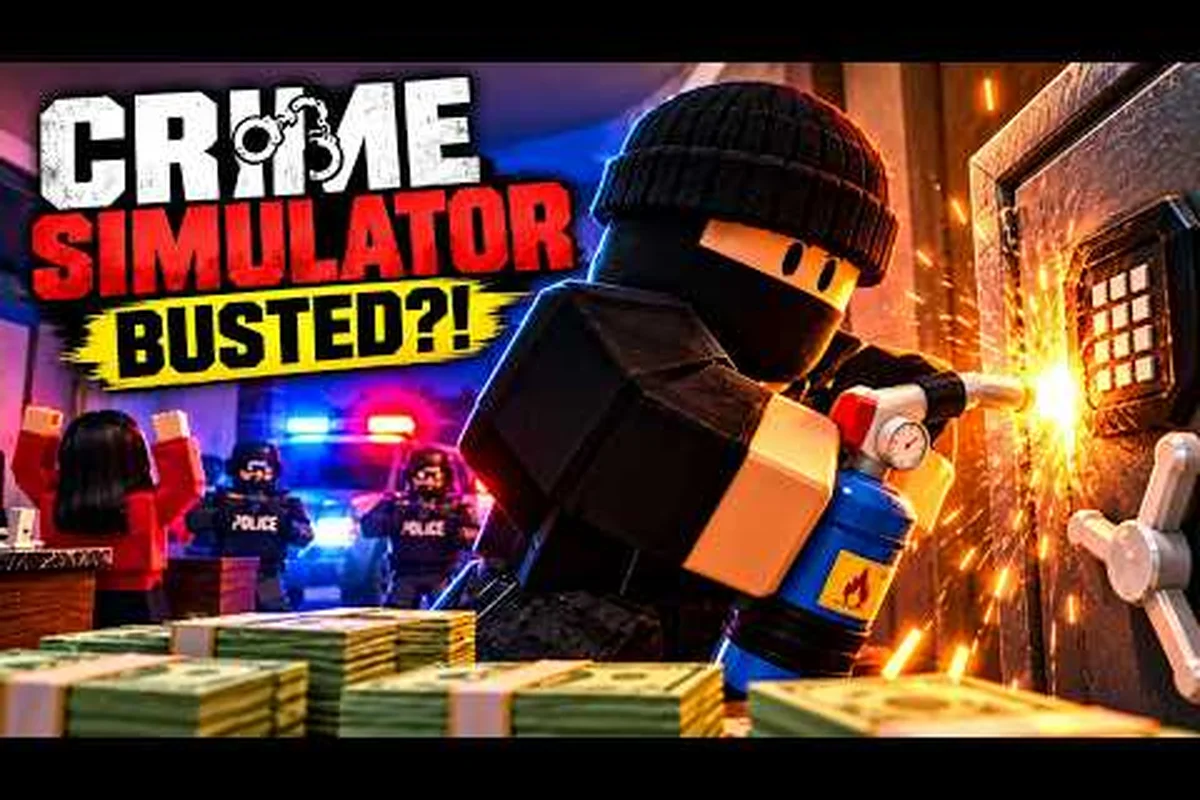
Criminal simulator losing the cops comes down to reading the police response. These escape rules help you break pressure and survive long enough to sell your loot.
Criminal Simulator Police Presence and Escape Overview
Knowing how to handle criminal simulator losing the cops situations can turn a failed robbery into a survivable escape. Police cars, patrols, and K9 units create layered pressure, so the best strategy is to read the response, preserve your route, and avoid making the same mistake twice.
The official Criminal Simulator Roblox page describes a night-heist loop built around sneaking past residents, escaping police and their K9 dogs, and selling loot before a deadline. That means escaping a chase is only half the job: you still need enough time and mobility to turn stolen goods into money.
A successful escape depends on how the police response develops rather than on a single getaway vehicle. If a patrol spots you, stay away from open intersections, use buildings and alleyways to break line of sight, and keep moving before police cars can coordinate a blockade. When a K9 unit is nearby, changing direction after creating distance can disrupt its scent trail; if your loot is slowing you down, sacrificing low-value cargo may be more effective than accepting a close arrest. The right decision separates a recoverable pursuit from a failed run and preserves enough time to sell the remaining loot before the deadline.
| Immediate situation | Best decision | Main reason |
|---|---|---|
| One patrol blocks the direct road | Move through a parallel street | Avoid a predictable roadblock trap |
| Police cars converge from two directions | Break sight behind solid cover | Prevent officers from boxing you in |
| K9 unit is close | Add distance, then change direction | Preserve a chance for the dog to lose your scent |
| Loot slows your movement | Drop low-value cargo if needed | Mobility matters more than an extra item |
Core Escape Principles
The central rule in criminal simulator losing the cops scenarios is simple: distance is temporary, but lost vision is useful. You do not need to outrun a police car forever; you need to create enough separation for the pursuit pattern to loosen.
Move unpredictably, prefer routes with multiple exits, and never stop in a dead-end lane. Solid visual breaks help because officers and dogs must reacquire your position after you leave direct sight. A wider route may add a few seconds, but it reduces the chance that two patrol units can pin you at a corner.
Reading Criminal Simulator Police Response Patterns
A chase becomes difficult when you treat every patrol the same. The official game page highlights police and K9 dogs as separate threats, while community reports describe a pursuit that becomes more dangerous when the player keeps moving through predictable central routes. The practical response is to identify the threat in front of you before selecting an escape path.
How the pursuit escalates
The police response generally expands in layers. First, nearby officers react to the crime or sighting. Then patrol vehicles arrive through streets nearby, giving the pursuit a faster interception option. Finally, K9 support extends the search area and rewards players for breaking line of sight rather than simply sprinting around a corner.
| Pursuit stage | Visible pressure | Player response |
|---|---|---|
| Initial contact | Foot officer or nearby patrol | Put a building or vehicle between you and the officer |
| Vehicle response | Police cars approach from side streets | Change route before they reach the junction |
| Coordinated response | Multiple cars occupy likely exits | Use a less visible service path or parallel block |
| K9 response | Dog tracks while officers search nearby | Break sight, vary your path, and keep moving |
This escalation explains why criminal simulator police cars are dangerous even when they are not directly beside you. A patrol arriving from a parallel street can close an escape route before you commit to it. By watching cross-street movement, you can identify that convergence early and choose a second route while options remain.
Police cars versus foot patrols
Police cars are excellent at covering distance and blocking obvious lanes, but they depend on roads and junctions. Foot patrols can cut across smaller spaces, yet they usually lack the speed needed to maintain a long pursuit. The safest response depends on your current position and whether you are carrying loot.
| Escape factor | Police cars | Foot patrols |
|---|---|---|
| Best advantage | Speed and road coverage | Access to narrow routes |
| Weak point | Predictable streets | Limited long-distance pursuit |
| Counterplay | Change streets before they converge | Use corners, alleys, and doorways |
| Carry-loot impact | Very high | Moderate |
If your movement speed is reduced by cargo, prioritize a foot patrol over a nearby police car. The smaller unit gives you more opportunities to round corners and enter a path that vehicles cannot follow directly. That advice also improves criminal simulator police presence management: every visible officer represents a different kind of search pattern, not simply another health bar.
For a deeper look at dogs, officers, and chase behavior, review the analysis of Criminal Simulator police behavior and escape mechanics. It complements the route planning here by showing which units are likely to continue searching after you disappear.
Routes and Tactics for Losing Police Cars
Winning criminal simulator losing the cops encounters requires route planning before the first patrol turns. A good escape route has at least two exits, several corners, and access to a parallel street. A poor route forces you to approach the same patrol from the opposite direction or gives officers a clear firing position.
Build a three-part escape route
Start by identifying where the pursuit begins. From that point, choose a first turn that breaks direct visibility, a secondary route that moves away from the main patrol corridors, and a final exit near a safe selling or regrouping location. This structure prevents panic turns that send you back toward the original crime scene.
-
First turn: break the officer’s direct line of sight with a wall, corner, or parked vehicle.
-
Secondary turn: move across a parallel street instead of continuing in the same direction.
-
Exit: reach a selling point or safe area before the police response fully converges.
The official Criminal Simulator page on Roblox lists sneaking, police avoidance, K9 dogs, and a deadline-based sale objective as central elements of the experience. The deadline matters because a technically successful escape may still fail the run if too much time passes before the loot is sold.
Use intersections as decision points
Intersections reveal more police activity than straight residential streets, but they also offer the best opportunities to reverse direction. A wide junction lets you observe whether officers are approaching from one side or both. If patrol cars enter behind you, take the first open side street rather than continuing along your planned route.
| Route decision | Signal | Action |
|---|---|---|
| Intersection ahead | No visible vehicles | Cross quickly and continue toward the exit |
| Vehicles on both approaches | Box-in risk | Turn at the nearest parallel street |
| Police car turning behind you | Pursuit acceleration | Break sight behind cover |
| K9 handler moving closer | Scent pursuit | Vary direction and add distance |
This route discipline makes criminal simulator police response easier to counter. Rather than waiting until a patrol is beside you, you can recognize the signs of a converging search and alter your path before the noose tightens. The goal is not to complete every planned turn; it is to preserve access to a next turn.
Move with the loot
Cargo is valuable, but it can make escape more expensive if you insist on carrying every item through a chase. Dropping the least useful cargo can preserve your mobility and prevent a police car from closing the final gap. Make that decision before the road narrows or officers surround the vehicle you are using.
| Loot situation | Recommended action |
|---|---|
| Full cargo and a short route to safety | Continue if your movement remains stable |
| Slow movement with several police cars nearby | Drop part of the cargo |
| K9 close and officers blocking exits | Abandon speed over possession |
| One safe route remains | Take it without unnecessary turns |
Player experience reports support treating loot as a tool rather than a promise. Community guides often emphasize income and fast-selling routines, but the same income is lost if a pursuit ends in arrest. The correct decision depends on the value of the run and the probability of reaching a buyer.
Police Presence, K9 Dogs, and Losing Sight
The hardest part of criminal simulator losing the cops is often not the police car directly behind you. It is the expanding search radius created by officers, vehicles, and a K9 unit. Each unit covers a different kind of space, so you must respond to the strongest threat without revealing the others.
Dogs change your route selection
A K9 unit is most dangerous when it reaches a nearby intersection after officers establish a general area. Because the official game page explicitly names K9 dogs as part of the escape challenge, treat them as a normal part of pursuit planning rather than an unexpected event.
The best counter is to break direct sight and then create a reasonable visual break. A dog may still alert officers, but a player who continues straight through familiar streets gives the search a much easier target. Change speed, turn through a different block, and avoid retracing the route that brought you into the area.
Line-of-sight break: a corner, wall, or parked vehicle that puts an obstacle between the police officer and K9 dog, preventing them from seeing or tracking your movement. Use it when the K9 reaches an intersection or starts following your trail: cut behind the obstacle, wait for both the officer and dog to lose visual contact, then move through a different block. This breaks the dog’s scent-based pursuit rather than merely delaying its arrival, but the dog can still alert officers if it detects you before the visual separation succeeds.
Route break: a different street or block that prevents the search team from predicting your next move. After a line-of-sight break, take a parallel street instead of the road that leads back toward the last known police presence. For example, if officers are checking the main avenue near the K9, cross one side street, continue two blocks, and use another perpendicular turn to create an unpredictable route. This makes the police response less focused on your apparent escape path, while a time break gives the dispersed search team less chance to regroup.
Time break: enough distance and delay for the local response to disperse. In Criminal Simulator, this is more useful when you can make the police presence lose your trail without triggering a new alarm. For example, after breaking line of sight behind a wall or parked vehicle, keep moving through adjacent blocks instead of circling back toward the last known police location. The delay gives police cars and K9 units less time to coordinate a search, while your changing route prevents their predicted path from matching your actual escape direction.
Those three breaks make the dog less likely to dictate your movement. If you want a focused explanation of this mechanic, the guide to Criminal Simulator K9 units and last-chance escapes continues the arrest-focused analysis.
Read the handler before the dog
The handler’s movement can reveal where the K9 search is heading. When the officer turns toward a narrow street while the dog follows, the pair is likely checking that route. A controlled pivot to a parallel street can create more distance than running down the street they just left.
Do not rely on one flawless maneuver, because the official Roblox listing supports groups of one to four players and features team-oriented heists. If you play with a crew, coordinate turns without making every member turn at the same instant. Splitting into different blocks may spread attention, but it can also make the group easier to locate if every player repeats the same behavior.
| Team situation | Better approach |
|---|---|
| All players use one route | Stagger turns and cross streets |
| One player carries the most loot | Give that player the safest exit |
| Officers split into groups | Avoid reconnecting in the same street |
| One player is caught | Others should preserve the sale opportunity |
When to stop running
Running forever can keep you in crowded police corridors. A short stop after a clean break, such as inside a building or behind a suitable obstacle, can reset the immediate pursuit. The key is to wait until the nearest officer commits elsewhere, then move through a route you have already checked.
This is different from camping in one location while officers search systematically. The best pause point has multiple exits, limited visibility, and no obvious connection to your last position. For example, slip into a warehouse with two separate doors, use stacked cargo to block the police cars’ sightline, and leave through the side entrance rather than retracing your approach. The key is that the police response should lose your current trail, not merely pause for a moment; otherwise, their search radius will quickly close around the building and turn a hiding spot into a trap. If it fails those checks, keep moving.
How Arrest Turns a Chase Into a Failed Run
Arrest matters because a successful robbery or completed chase can still become a failed run. The official description frames failure around debt and the deadline, while community observations indicate that capture interrupts the escape and sale cycle. The exact visual sequence may change with updates, so the dependable focus is on the outcome rather than a precise animation.
What happens when arrested?
When a police unit catches you, the chase ends and the criminal simulator arrest consequences apply. In practical terms, you cannot continue the current escape, complete the delivery, or treat the arrest as a harmless delay. The run may be lost, and any carried loot becomes unavailable for the sale you were trying to make.
That creates a key economic decision. A player with low-value cargo can risk one more route because little is at stake. A player carrying a full haul may need to abandon items earlier. The Criminal Simulator guide to avoiding arrest consequences gives additional context on protecting valuable runs.
| Moment in the pursuit | Arrest risk | Best choice |
|---|---|---|
| Officer is only a few steps away | Very high | Use an immediate cover break |
| Police car blocks the road | High | Find a side route before it arrives |
| K9 is tracking nearby | Medium to high | Change streets and break sight |
| Officers have lost visual contact | Lower | Route safely toward a buyer |
| Cargo severely reduces movement | High | Drop cargo earlier |
Understanding criminal simulator what happens when arrested helps prevent the common mistake of treating a chase as unwinnable. A pursuit that seems impossible may still have a low-risk solution: shed the dogs, leave the vehicles behind, and accept a longer route to safety.
Arrest versus deadline failure
There are two major ways to lose a run, and each requires a different prevention plan. A chase ends in arrest when police make contact. A deadline failure happens when time expires or required money remains unpaid. The official page’s mention of paying down debt before the deadline makes the second failure mode especially relevant even after a clean escape.
| Failure type | Trigger | Prevention |
|---|---|---|
| Arrest | Police catch the player during a pursuit | Break sight, vary routes, preserve mobility |
| Deadline failure | Sale or debt obligation is not completed in time | Plan a nearby buyer and leave early |
| Sniper-related failure | The official page warns that unpaid debt can lead to the sniper | Settle the debt before the deadline |
Avoiding arrest is therefore only one part of criminal simulator getting arrested prevention. You also need a selling plan that does not consume the time gained during the escape. Keep the destination in mind from the beginning of the chase instead of making a full-city detour after shaking the police.
A practical last-chance decision
When the situation turns bad, rank the available actions by risk. A clear side street is better than a contested junction. A short pause behind cover is better than standing in the open. Carrying less loot is better than being unable to turn a corner. A known buyer is better than improvising a sale after the clock has nearly expired.
| Priority | Action | Reason |
|---|---|---|
| 1 | Break line of sight | Reduces immediate capture chance |
| 2 | Move away from patrol corridors | Prevents vehicle convergence |
| 3 | Protect movement speed | Improves reaction time |
| 4 | Reach a reliable buyer | Protects the completed escape |
| 5 | Recover more loot | Lowest priority during danger |
This ranking keeps greed from overriding immediate survival. For example, if police cars begin converging on your location, staying on the main road for one more loot pickup may be less valuable than using a side street to break line of sight; a successful sale still requires reaching a reliable buyer, whereas a failed escape can trigger arrest consequences and end the run. Treat every decision as part of a repeatable escape plan rather than a way to buy only a few extra seconds.
A Reliable Escape Checklist for the Final Chase
A dependable criminal simulator losing the cops routine should be brief enough to use under pressure. The checklist below turns the pursuit into decisions about visibility, route, cargo, and time. It does not depend on memorizing one perfect street because the safest path depends on your location and the patrol pattern around you.
Before the pursuit begins
Prepare one primary exit and one fallback before stealing. Keep both in mind, and choose routes that cross parallel streets rather than funneling through a single central corridor. If the official game supports one to four players, confirm that everyone knows which exit remains usable if the team splits.
-
Pick a selling destination that is not immediately beside the robbery.
-
Keep one direction free for an emergency turn.
-
Avoid stacking loot beyond the point where movement becomes unreliable.
-
Watch for patrols already moving through the intended exit.
During the pursuit
First, identify whether the nearest threat is an officer, a police car, or a K9 unit. Address the unit that can remove your next option. If a police car is approaching a junction, leave before it arrives; if a dog is close, prioritize a line-of-sight break; if an officer is nearly touching you, use immediate cover.
The central checklist is: the nearest officer, police car, or K9 unit; the distance and angle of the threat; nearby cover; escape routes; and vehicles or corners that can break line of sight. For example, if a police car enters a junction while you are still on the road, move through a side street before it arrives rather than trying to outrun it in a straight line. If an officer is within immediate contact range, use the nearest solid cover first, then reassess the pursuit. A K9 unit changes the priority: it can track scent and close off an otherwise safe route, so create a line-of-sight break before the dog reaches you. Watch for police presence escalating from one patrol unit to several converging vehicles, because each additional car narrows your options and increases the risk of arrest. Once you have broken sight, commit to the planned buyer and avoid lingering, since prolonged police response can turn a temporary chase into an arrest and trigger the game’s arrest consequences.
-
Break sight: get walls, corners, or vehicles between you and the pursuer.
-
Change route: cross a parallel street instead of continuing straight.
-
Protect speed: drop low-value loot if movement is compromised.
-
Track convergence: watch for police cars arriving from cross streets.
-
Commit to the buyer: once clear, head directly to the planned sale point.
After the chase ends
Do not immediately return to the robbery scene. Give the local search time to widen, then use a different route to the buyer. This protects your earnings and prevents a repeated confrontation with the same patrol. For more detailed chase planning, surviving a Criminal Simulator pursuit by breaking line of sight expands on the route and timing principles used here.
The checklist produces a useful hierarchy: visibility first, route second, cargo third, and extra loot last. If you can see a safe exit, take it before trying to perfect the escape. A clean sale is a better outcome than a dramatic chase that ends in arrest.
Frequently Asked Questions
Can you escape police cars in Criminal Simulator?
Yes, but you usually need to change routes rather than rely on a straight sprint. Police cars cover roads quickly, so break direct sight, move through a parallel street, and watch for vehicles converging from side routes. Your odds improve when you are not carrying enough loot to slow movement.
What happens when you get arrested in Criminal Simulator?
Getting arrested ends your successful escape attempt and can cause the current run to fail. You cannot complete the planned sale after capture, and carried loot has no value if it cannot be delivered. The exact arrest sequence may change, but avoiding contact remains the safest way to preserve earnings.
Do police cars always catch you during a chase?
No. Police cars are fast on roads, but they lose flexibility around tight corners, obstacles, and service paths. Their main advantage is intercepting obvious exits. A player who changes direction before vehicles converge can create enough distance for the pursuit to weaken.
Should you drop loot to escape the police?
Drop loot when carrying it noticeably reduces your movement or prevents you from taking the safest corner. A partial loss is usually better than being stopped, arrested, and losing the full haul. If your movement remains strong and a clear route exists, keep the cargo and prioritize the buyer.
How do K9 dogs affect police response?
K9 dogs make search areas more dangerous because they can help officers continue tracking after you leave direct sight. Break visual contact, vary your route, and avoid returning to the same nearby streets. A dog does not remove every option, but it punishes predictable running and repeated turns.